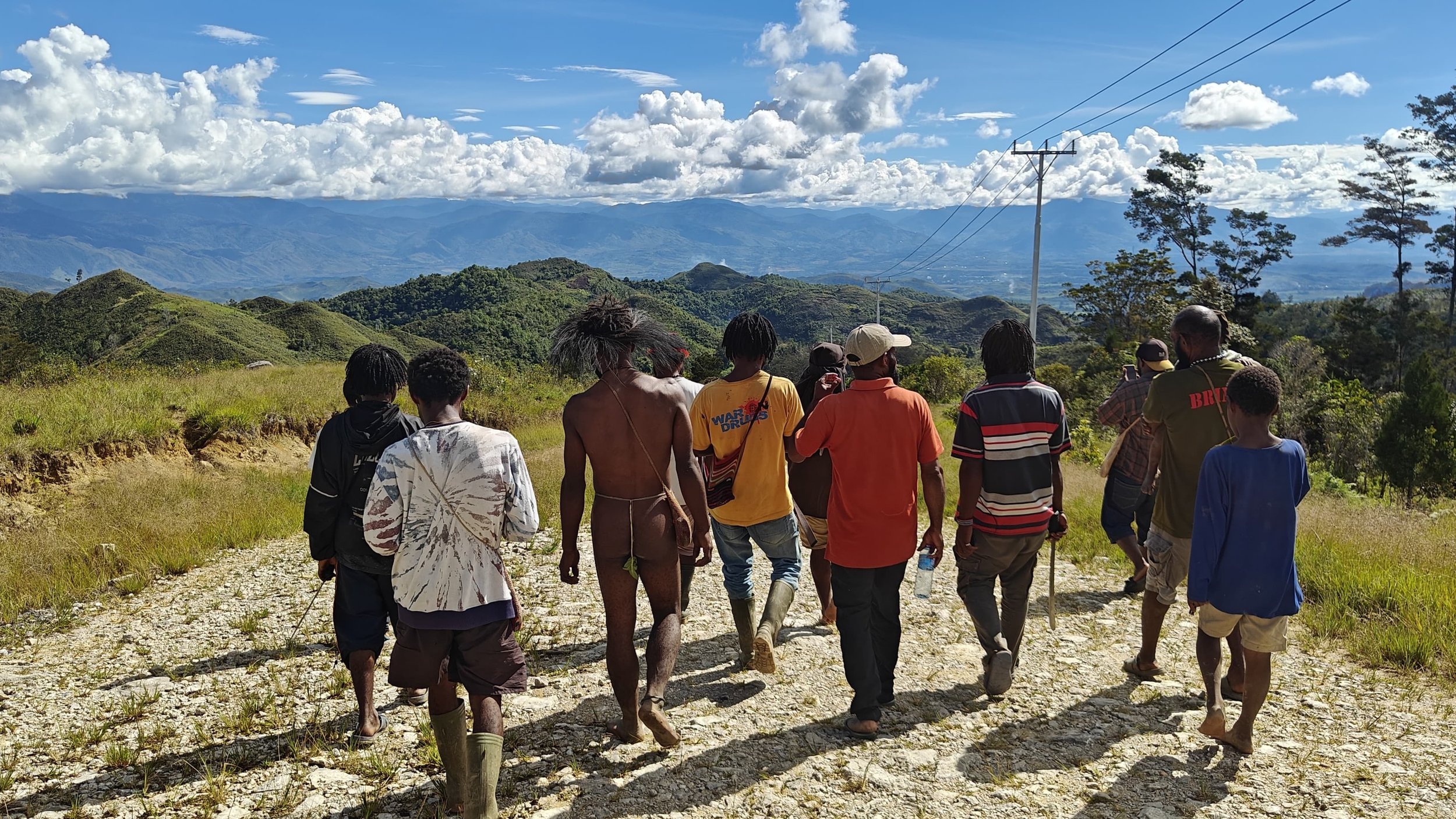
The first time I experienced the deep resonant call of the Alikine, the whole village fell silent.
We were sitting inside the men’s Honai (traditional house), packed closely together on the straw floor. Earlier, we had been eating hipere(sweet potato), passing them back and forth through the smoke. Allthough my Bahasa Indonesia, and my Hugulama even more so, was practically nonexistent, we got by through laughter and the act of sharing the fire that kept us all warm, as the cold night in the mountains settled.
That sound interrupted everyone.
The Call of the Alikine
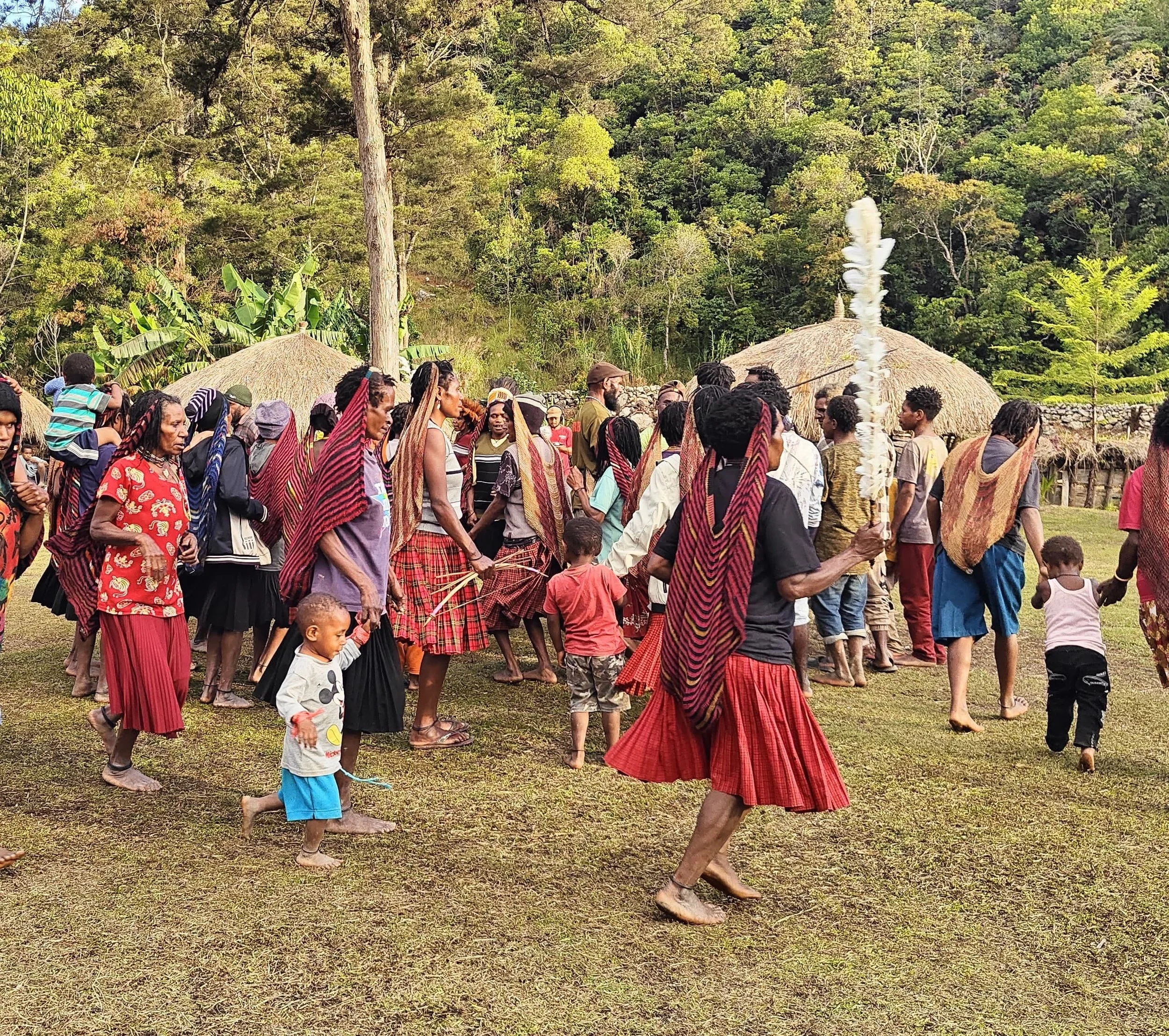
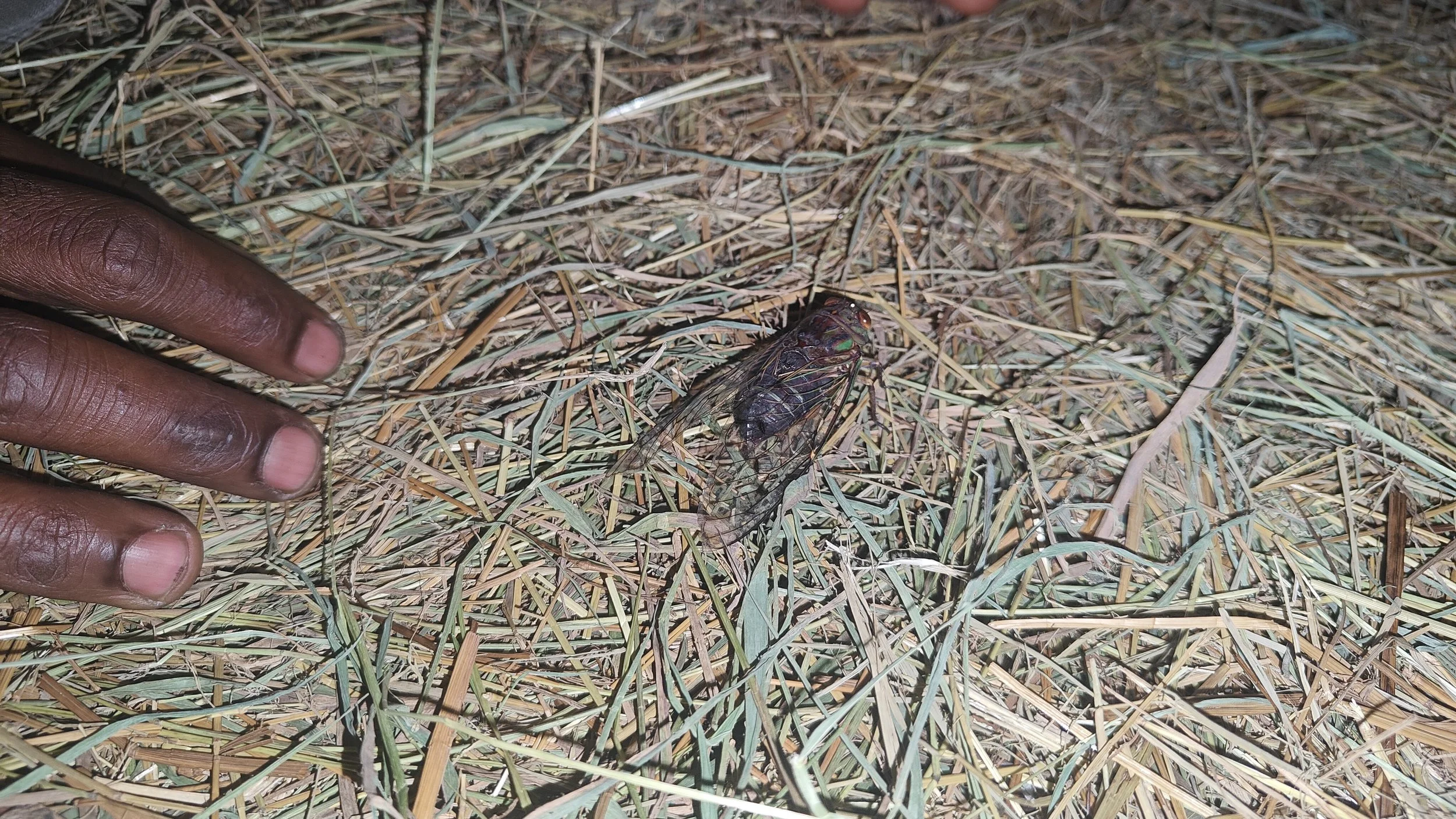
To an outsider, the Alikine is “just” a cicada. But for the Hubula here in the Highlands, it is treated more like a neighbor you’d like to keep close. Usually, they call at dusk. When they do, the village empties out onto the open grass between the Honai, people forming a circle to sing back in a shifting and rhythmic call-and-response. Some run laps around the circle. It’s a literal dialogue between the people and their nature.
But when an Alikine arrives in the village outside of the usual timing, people start to listen carefully. Its unusual presence could announce something approaching their village. Whether this is something good or bad is not immediately known. It could signal a conflict, loss in the village, or another event that will shape the community’s future. Understanding its meaning requires experience and deep listening.
That first night, one of the cicada flew straight into the Honai. The village leader leaned in and began speaking quietly to it in Hugulama. When he finished, tension in the room dissolved into smiles. They looked at us and explained: the Alikine was responding directly to our arrival. It welcomed us.
Please listen to this incredible recording of the Alikine ceremony at dawn, captured by Papuan sound artist Markus Rumbino
Living Together
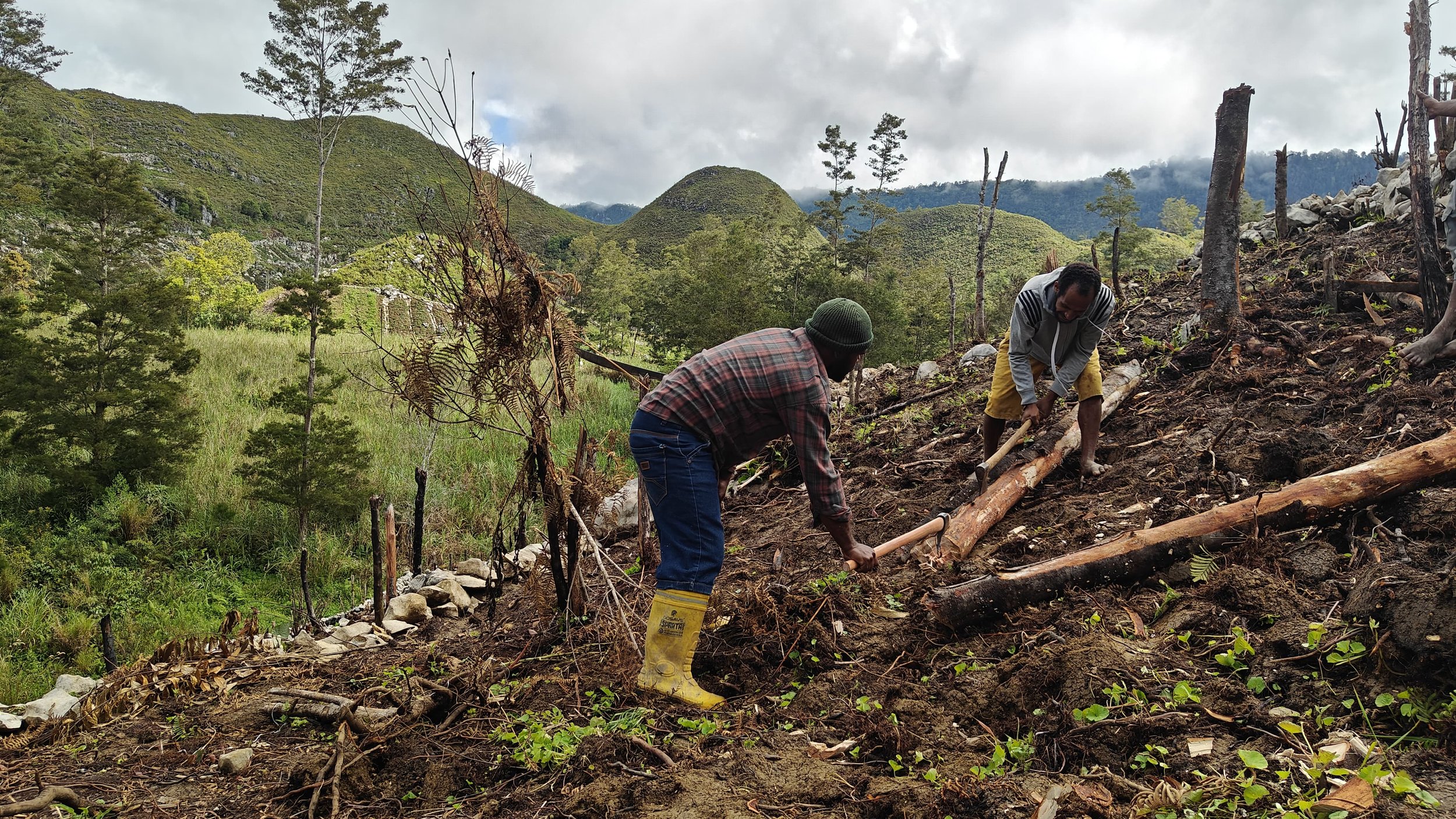
To truly understand the Alikine required more than hearing its sound. It required living alongside the people who listened to it. Together with my friend Markus Rumbino, during my residency at Alyakha Art Centre, we lived as closely as possible to everyday life in the village. Our days revolved around tending gardens, gathering firewood, preparing hipere through the communal stone-cooking tradition known in Indonesian as bakar batu, and sharing meals in a Honai. Gradually, it became clear that the Alikine’s call was meaningful because it belonged within the rhythm of everyday life.
Learning to Listen
It’s easy to point a microphone and press record. It’s much harder to understand what you’re actually listening to. The Alikine isn’t just an insect making noise; it’s a neighbor in an ongoing conversation with the community. If my time in West Papua taught me anything, it’s that field recording isn’t just about capturing sound. It’s about understanding the people who know what the sounds mean.
Due to the sensitive political context of the region, and out of respect for the community that welcomed me into their homes, I have intentionally left out names and details that could identify the village more precisely. I aim to return to these stories in a larger work, where, together, we will highlight the inspiring initiatives from within the community in an effort to protect their culture and identity within the ongoing challenges faced by the people of West Papua. These are stories that deserve to be shared with care and reach wider audiences.